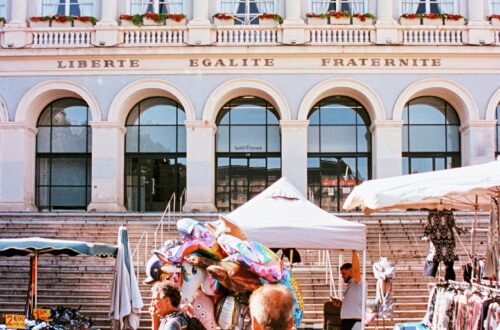
Are you a food lover? A fine gourmet or just a gourmand as we say in French? Then you must come to Lyon, my home town, the Capital of Gastronomy in France! In Lyon, cuisine is written in capital letters. It has deep roots and is part of the legend of this region, thanks to internationally renown French chefs such as Paul Bocuse and the Trois Gros brothers. Let’s understand – what makes Lyon the French capital of gastronomy which makes it arguably the capital of gastronomy in the world. I’ll also tell you a bit more about the traditional Lyon food and the restaurants you must try when you come here! Let’s dig in, I hope you’re hungry!
Table of Contents
Lyon: The Capital of French Gastronomy
Regional culinary: the best cultural heritage
Our story begins in 1935, when Maurice Curnonsky, a famous novelist, humorist, and above all, a gastronome and culinary critic, declared Lyon as the capital of gastronomy. But what made him choose Lyon over other French cities known for their cuisine? Let’s uncover the history and criteria behind this prestigious title.
Curnonsky wasn’t just any food enthusiast. In 1921, he published ‘La France gastronomique,’ a series of 32 booklets documenting the regional cuisines and best restaurants across France. By 1933, he had compiled ‘Trésor gastronomique de France,’ a comprehensive guide to French gastronomy. This deep dive into French cuisine earned him the title ‘Prince of Gastronomes,’ bestowed by over 3,300 chefs, restaurateurs, and peers.
Curnonsky’s decision to crown Lyon as the French gastronomy capital was rooted in the city’s natural flair for simplicity in its cuisine. He believed that the true art of cooking lies in making dishes taste like what they are, a philosophy Lyon mastered effortlessly. But what makes Lyon’s cuisine stand out? Let’s explore the key elements.
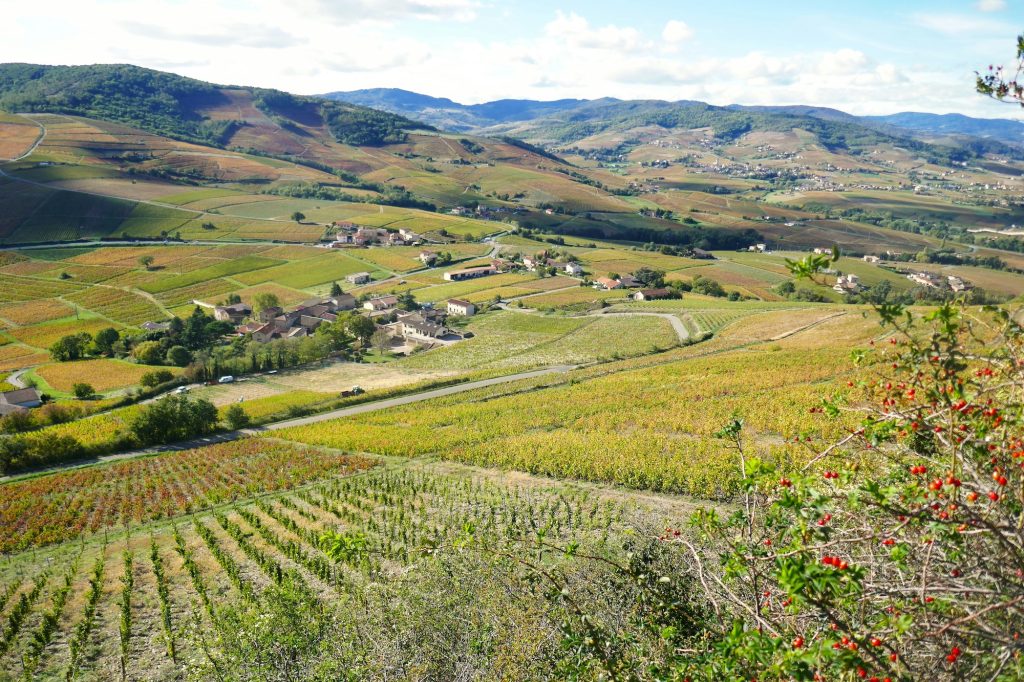
Terroir is the key to French food success
Terroir comes from the earth or soil (terre is French). A good and specific soil makes a high quality produce. A French regional produce is characterised by a type of soil and therefore terroir and cuisine or wine.
Lyon’s strategic location at the crossroads of the northern Rhône Valley and Burgundy vineyards contributes to its culinary richness. The city boasts diverse wines from regions like Saint-Joseph, Côte-Rôtie, and Beaujolais-Village, perfectly complementing its dishes. Despite modern criticisms about the traditional use of fat, Lyon’s cuisine remains deeply rooted in friendliness and unpretentiousness, offering comforting, hearty meals in a warm, epicurean atmosphere.
Lyon’s specialties and culinary traditions
In Lyonnaise cuisine, you’ll find specialities like saucisson de Lyon, a sausage often prepared with pistachios, and quenelles, which are delicious dumplings made from pike. The city is also known for its offal dishes, (I’m a big fan of those) reflecting a no-waste approach to cooking. These traditions stem from Lyon’s historical role as a trade crossroads, bringing together diverse ingredients and culinary influences.
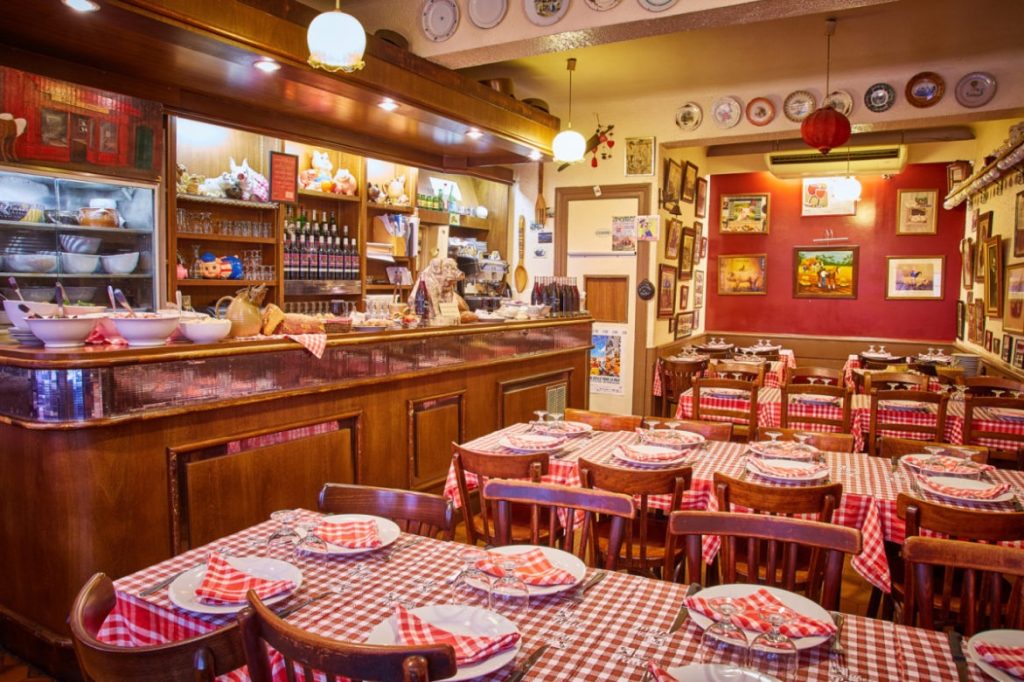
One of the most iconic aspects of Lyon’s culinary scene is the Bouchon Lyonnais. These traditional eateries embody the city’s gastronomic spirit with their warm, convivial atmospheres, simple yet exquisite dishes, and the famous ‘pot lyonnais,’ a 46cl bottle of wine unique to Lyon.
4 tips for recognising a genuine Bouchon Lyonnais
Lyon’s Bouchons are steeped in the city’s gastronomic history. They are the emblem of simple, authentic cuisine and attract many gourmets from France and beyond. In Lyon, you can find quite a few of them, but some are clearly lacking in authenticity. To avoid making a mistake, here are a few tips to help you discover Lyon’s gastronomy. So let’s see the 5 tips for recognising a genuine Bouchon Lyonnais:
1-The old-fashioned, rustic facades of the Bouchons
It has to be said that the façades of Lyon’s Bouchons are often not very modern. There are often a few elements in common with all the Bouchons, such as the crochet or gingham curtain halfway up the window, a wooden front with old-fashioned writing, a menu on a slate, etc.
2- They’re often located in small, hidden streets
If you’re looking for a “Bouchon”, don’t hesitate to venture into the narrow streets of Lyon, particularly in the 1st and 2nd district but not only.
3- Look for the “Bouchons lyonnais” label
The “Bouchons lyonnais” association rewards and brings together restaurateurs who are committed to preserving and promoting Lyon’s gastronomic heritage. They work to promote the authentic “Bouchons lyonnais”, to prevent the label from being trivialised. You can find the list of labelled bouchons on their website.
4-Make sure you find typical Lyonnais dishes on the menu
The traditional pike quenelle with crayfish bisque sauce is rarely absent from the menus of authentic Bouchons, but just because it’s served in a restaurant doesn’t mean it’s a Bouchon! So you should also make sure it also meets at least a few other criteria I just explained. Be sure to try the artichoke with foie gras, or the tripe available in several forms, not forgetting the famous praline tart for dessert, a must for any Lyonnais Bouchon.
Today, restaurateurs have made certain recipes their own and made them their speciality:
– The homemade quenelle at Le Pôelon d’Or is also well worth a visit.
– At Chez Chabert, try the calf sweetbreads with morel mushrooms, the must-try dish of the restaurant.
And there are many other authentic Bouchons that are worth a visit!
Female chefs are the precursors of French cuisine in Lyon
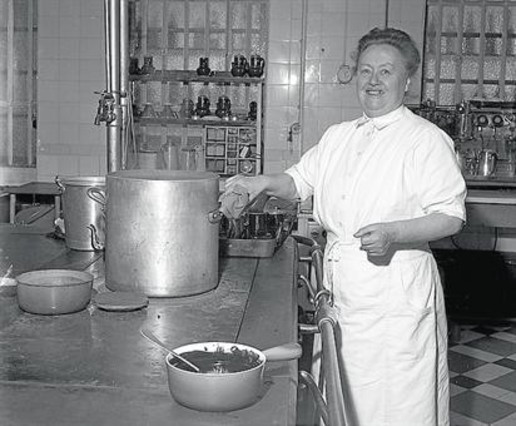
A key chapter in Lyon’s cultural heritage is the legacy of Les Mères Lyonnaises (Lyon’s mothers in French), the pioneering female chefs who shaped the city’s cuisine. In a field dominated by men, these women made their mark by transforming home-cooked meals into gourmet experiences.
Most of the Meres Lyonnaise were cooks working in middle-class homes before opening their own restaurants. The French dishes they served were regional, popular, hearty, simple and refined, thanks to their previous experience. This explains the presence of a lot of offal in their cuisine: nothing could be thrown away in bourgeois homes, so they kept a sense of culinary recycling. Figures like Mère Brazier and Mère Bourgeois, who earned Michelin stars in 1933, played a crucial role in elevating Lyon’s gastronomic status.
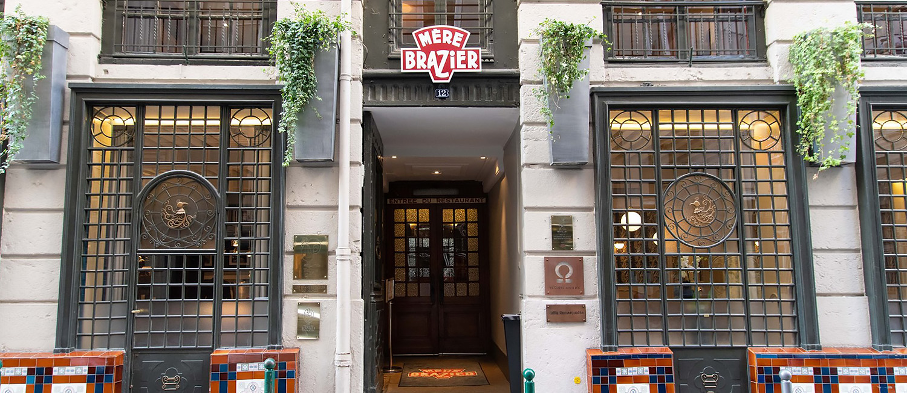
The restaurant Mère Brazier founded in 1921 still exists today. It is one of the cornerstones of Lyon’s high gastronomy world. Mère Brazier was more than an exceptional chef, she trained the legendary chef Paul Bocuse, further cementing Lyon’s culinary heritage.
Paul Bocuse, often referred to as the god of French cuisine, brought global recognition to Lyon. His emphasis on fresh ingredients and a lighter approach to traditional French dishes led to the creation of ‘la nouvelle cuisine.’ Bocuse’s influence extends beyond his restaurants in Lyon and Lyon’s region to a culinary empire, including a prestigious cooking school and an international chefs’ competition.
Today, Lyon continues to honour its culinary traditions while embracing modern innovation. The city hosts events like the SIRHA (Salon International de la Restauration et de l’Hôtellerie – International Hotel and Catering Exhibition).
Lyon is home to 15 Michelin-starred restaurants and surrounded by 67 Appellations d’Origine Contrôlée, highlighting its ongoing commitment to culinary excellence. In France, the appellation d’origine contrôlée is a label that identifies an agricultural product whose stages of production and processing are carried out in a defined geographical area – the terroir – and using recognized and traditional know-how. Famous examples of AOC products would be Champagne wine. To be called Champagne, the sparking wine has to be produced in the region called Champagne and follows a precise production process.
The gastronomic meal history and much more
Now if you are visiting Lyon or live here, I strongly recommend you to visit the International City of Gastronomy which opened its doors in the autumn of 2019. It covers 4000 m2 and is located under the Dôme des Quatre-rangs, the oldest part of the Grand Hôtel-Dieu.
The International City of Gastronomy includes many projects such as:
- a permanent exhibition space about Gastronomy of course!
- an interactive gastronomic atlas that allows you to travel around the world of taste.
- a room called “Le Repas” which is based around the French gastronomic meal.
- a “Banquet” room, in a traditional Lyon brasserie decor, with Chefs who have marked the region such as la Mère Brazier or Paul Bocuse to talk about famous Lyon delicacies. BTW a great brasserie I recommend you to eat at is Brasserie Georges, just make sure to arrive early.
- and so much more. Check there website for more information. It’s worth it!
An UNESCO center and French cultural experience
Did you know that 10% of the city of Lyon were listed as UNESCO World Heritage?
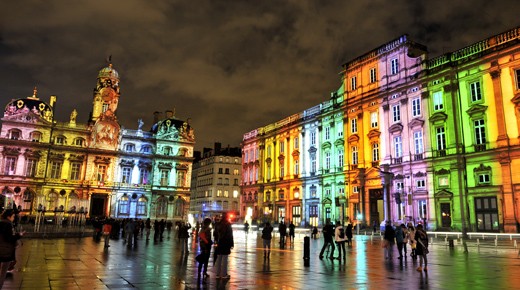
The district of Vieux Lyon, Presqu’île, Croix Rousse and Fourvière are a must-see. The best combination would be to come during the Festival of Lights which is a magical experience. Held every December around December the 8th, this event transforms the city into a dazzling display of light and art, perfectly complementing its vibrant French food scene.
For expats in Lyon, the city offers an unparalleled gastronomic adventure. From traditional Bouchons to contemporary fine dining, there’s something to satisfy every palate. Living in Lyon means immersing yourself in a culture where food is not just a necessity but a celebration of life.
So, there you have it—why Lyon is the capital of gastronomy in France and beyond. Its unique blend of history, tradition, and innovation makes it a must-visit for any food lover.